Recognizing Peptide Pureness: What 99%+ Really Suggests
Exactly How To Read A Peptide Purity Test: Hplc, Mass Spectrometry And Coa Analysis For Uk Researchers 2026
Determining peptide pureness is typically finished with logical high-performance fluid chromatography (HPLC), often paired with mass spectrometry (MS) for identity verification. These logical techniques are typical in peptide quality control and you will generally receive HPLC and MS data with a research study peptide order. The key logical methods for peptides consist of fluid chromatography (LC), typically HPLC, incorporated with mass spectrometry (MS) for exact molecular weight decision and sequence recognition.HPLC informs you what proportion of your sample is the main compound-- but it does not verify what that major compound actually is. A peak with the appropriate retention time could in theory be a related peptide with similar hydrophobicity. Mass spectrometry provides identity confirmation by gauging molecular mass directly. We examine peptide size, sequence composition, expected molecular weight, modification kind, salt kind, sample background, and desired downstream usage prior to defining the analytical path.
A certified laboratory adheres to rigorous standards for examination accuracy and approach validation. You can often examine if a lab is certified via its website or documents; accreditation makes certain the laboratory's methods and outcomes are held to worldwide criteria. With high levels of experience in carbohydrate chemistry and our thorough peptide evaluation system, Innovative Peptides can provide premium peptide pureness resolution services. According to stringent evaluation quality assurance and biosynthetic quality control standards, each peptide is purely kept track of throughout the evaluation cycle.Apex Research Laboratory Content Group
HPLC can support claims about chromatographic pureness, impurity height worry, and destruction patterns when the technique is appropriate and the chromatogram is offered. If a peptide is re-tested after storage tension, HPLC can reveal whether brand-new pollutant peaks have actually shown up or whether the primary top location has decreased. This connects straight with handling topics such as peptide storage and peptide reconstitution. As an examples of product-level context, contrast the expected masses for Retatrutide, BPC-157, and Semaglutide.- Peptides are widely used in the clinical aesthetics, cosmetics, and biomedical areas because of their special organic activity and broad application capacity.
- An additional associated term you may encounter is internet peptide content, which is different from pureness.
- Our research laboratory uses cutting edge instrumentation and confirmed approaches to guarantee accurate, reproducible information throughout even the most complex peptide matrices.
- A solitary generic chromatographic technique is commonly inadequate for peptides that are hydrophobic, very basic, carefully relevant in turn, or partly purified.
- When a peptide is 98% pure, that continuing to be 2% isn't random noise-- it specifies, identifiable kinds of by-products.
FDA and the European EMA have established standards mandating detailed evaluation and quality assurance for peptide products to guarantee safety and effectivenessr. In the context of pharmaceutical or clinical-grade peptides, laboratory recognition is important to fulfilling these guidelines. For instance, Human Performance Research before a peptide drug can get in human tests, its manufacturer needs to show the identity, pureness, effectiveness, and safety and security of the peptide via confirmed analytical approaches. Peptide pureness screening data are required in preclinical researches and have to be included in investigational new medicine (IND) applications and later on new medication applications (NDAs).
Reviewing An Hplc Chromatogram
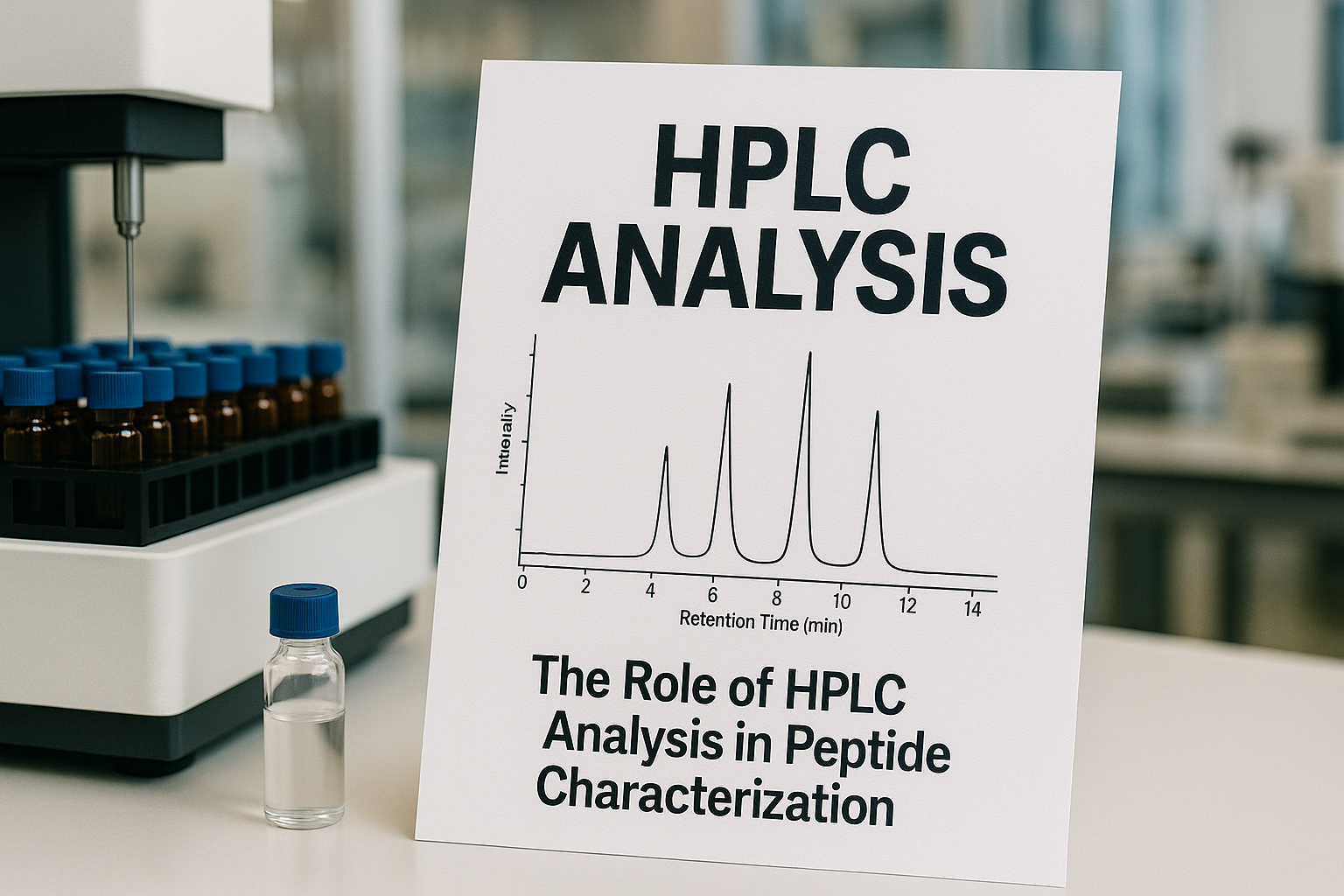
In theory, peptide purity is evaluated by the chromatogram produced by reversed stage HPLC, and furthermore, we can acquire the number and relative amount of possible by-products by determining the peak area. A high-grade chromatogram has a solitary, symmetrical main peak with a level standard on either side. " Trailing"-- where the top tracks off slowly on one side-- can suggest column problems, example overloading, or additional interactions in between the peptide and the fixed stage. In this configuration, the stationary phase is hydrophobic (water-repelling), usually C18-bonded silica. The mobile phase is a slope of water and a natural solvent like acetonitrile, usually with a percentage of trifluoroacetic acid (TFA) to sharpen the peaks.
Residuals Testing
By demanding peptides that come with confirmation of purity and identification, scientists can greatly reduce the threat of speculative artifacts. Conversely, using peptides that have actually passed third-party laboratory validation assists make sure that the observed speculative results are truly as a result of the designated peptide and not because of pollutants or errors. When you see peptides promoted as "research-grade," it refers to their intended usage and the level of manufacturing oversight. Research-grade peptides are made for research laboratory research use just-- they are not created under pharmaceutical GMP standards and are not suggested for usage as therapies or in human beings. These peptides come with a fundamental quality assurance bundle, generally consisting of HPLC purity evaluation and MS confirmation of identity, guaranteeing they satisfy clinical standards for pureness and structure.
We support amino acid make-up evaluation and net peptide web content evaluation for teams that need more dependable focus setting and set analysis. HPLC-tested indicates the example was gone through high-performance fluid chromatography to separate the target peptide from impurities. The purity portion is usually computed from the main height area separated by the total incorporated peak location.